Welcome to the Weintraub Tobin Resources Page

Browse below for news, legal insights, information on presentations and events, and other resources from the Weintraub Tobin legal team.


Is the Technology for Self-Driving Cars Patent-Eligible?

It sounds like a silly question, doesn’t it?  After all, self-driving cars represent innovative progress in technology, and patents are intended “to promote the progress of science and useful arts, by securing for limited times to authors and inventors the exclusive right to their respective writings and discoveries.”  U.S. Constitution, Article I, Section 8, Clause 8.

But not so fast — courts have found that many software-based inventions for automating known techniques are patent ineligible under 35 U.S.C. §101 (“§101”).  The reasoning is that these inventions merely represent abstract ideas, which are not patentable.  In fact, even when software was combined with standard hardware, such as computers, displays, cameras, and sensors, many courts have found that the inventions did not involve patent-eligible subject matter.  While this article does not focus on any particular patent, one could argue that certain aspects of self-driving cars are just attempts to automate, largely with the use of software and well-known hardware, what humans have been doing for over 100 years — driving cars while trying to avoid accidents.  Does that mean such patents would be rejected by the United States Patent and Trademark Office (“USPTO”) or invalidated by a court?

To analyze this issue in more detail, first we should consider the technology that many automobile and technology companies, such as Tesla, Volvo, Toyota, and Google, are developing to enable commercially viable, self-driving vehicles.  In fact, some of this technology is already on the road, and numerous patents have already been issued in the field.  The technology is based on the use of various combinations of sensors, cameras, computers, and software.  For example, radar sensors are used to detect the position of nearby vehicles.  Lidar, which uses lasers and sensors, can be used to measure the distance to objects, build a 3D map, and detect hazards, such as the edges of roads and lane markings.  Video cameras are used to detect obstacles such as pedestrians and other vehicles, as well as traffic lights and road signs.  Ultrasonic sensors in the wheels can be used to monitor car movements and detect curbs and other vehicles, such as for use in automatic parking.  But the heart of the system, which most would say is the most complex aspect, is the software that analyzes the data from all of the sensors and controls the car’s systems (e.g., steering, braking, and acceleration) to maneuver it safely.

What have courts said about the patentability of such software-based inventions?  In Alice Corp. v. CLS Bank, the U.S. Supreme Court looked at the patentability of certain claims under §101 by applying the two-step test it had set forth in Mayo v. Prometheus.  In applying the two-step test, first, a court should determine whether the claims are directed to an abstract idea.  If they are, the second step is to determine whether the claims include elements showing an inventive concept that transforms the idea into a patent-eligible invention.  While the Court in Alice stated it was treading carefully in invalidating the claims at issue and warned that applying the decision too broadly could “swallow all of patent law,” numerous patents have been invalidated by district courts in light of the decision in Alice.

At this point, the line between abstract idea and patentable invention has been blurred to the point that it is often difficult to determine whether an invention is patentable.  For example, the court in The Chamberlain Group LLC v. Linear LLC refused to invalidate claims for a monitoring and alarm system related to network communication between a controller and a movable barrier, such as a garage door.   As part of its reasoning, the court noted the claims were “not directed to a method for organizing human activity or computerizing a long-standing commercial practice.”  In contrast, other courts have found the use of computers, memory, transmitters, receivers, and networks not sufficient to save patent claims.  For example, the court in White Knuckle Gaming v. Electronic Arts invalidated claims on an Internet-based method for updating software because it was an abstract idea and performed on a conventional computer, server, and network.  In Visual Memory v. NVIDIA, the court found that categorical data storage was an abstract idea, stating it was a well-known technique performed by humans.  The court in Kinglite Holdings v. MicroStar invalidated a BIOS multitasking patent, stating that it was basically a process for doing two things nearly simultaneously and humans do that all the time.

This means that when asserting your patent in litigation, you will likely face a motion to dismiss on the pleadings or an early summary judgment motion if your patent is vulnerable to a §101 challenge.  In response, it will be necessary to 1) determine whether claim construction is necessary prior to a ruling, 2) argue what distinguishes your patent from an abstract idea, and 3) explain why your patent involves a sufficiently inventive concept that will transform an abstract idea into a patent-eligible invention under step two of the Mayo/Alice test.

In the case of software and sensors for self-driving cars, the system may be performing a task that humans often perform, but it is probably not doing it in the same manner that humans do.  There is a substantial difference between merely writing software to balance a checkbook using substantially the same steps a human would use and designing software that can drive a car.  That is because a human could not write down the steps or analysis techniques that one goes through to safely drive and navigate a car in all situations.  In fact, researchers have long been trying to understand how humans process images and signals received from the environment.  Therefore, one can argue that a self-driving car is not merely an automated implementation of the steps performed by a human.  Instead, a different approach and different algorithms suitable for computer implementation have been developed to accomplish the goal of driving.  We will have to wait to see if that distinction and argument will prevail.

The question has arisen whether courts can resolve the ambiguities and confusion of patentability under §101, or whether it is time for legislative action.  Some argue that the Federal Circuit and Supreme Court should give the district courts the guidance and clarification they need to predictably determine what is patent-eligible under §101.  David Kappos, former director of the USPTO, suggested the solution is to abolish §101.  Others suggest that amendment of §101 would be sufficient.  Until the issue is resolved, additional care must be taken when drafting patents to limit vulnerability to §101 challenges.

Non-Competes May Be Assigned To Successor Employers

Business People Handshake Greeting Deal Concept

It is a situation that arises often. Company A sells its assets to Company B. After the sale, some employees stay with Company B, and others leave. What happens to the agreements the departing employees signed with Company A? Does Company B get to enforce them? In Symphony Diagnostic Services No 1 Inc. d/b/a MobilexUSA v. Greenbaum, the Eighth Circuit Court of Appeals determined that non-competes agreements may be assigned to the successor company where: (1) the agreement expressly permits assignment; and (2) the agreement is not a contract for personal services.

Background:

Kimberly Greenbaum and Josephine Tabanag were mobile x-ray technicians for Ozark Mobile Imaging (“Ozark”). At some point during their employment, both Ms. Greenbaum and Ms. Tabanag signed nearly identical non-compete agreements with Ozark. Stating that “[i]n consideration of his/her employment by Mobile Medical Services Inc., Ozark Mobile Imaging, Clearview Mobile Imaging, LLC and/or its affiliates . . . ,” the agreements held that during his or her term of employment and for two years afterwards, the employee agreed within a specified geographical area not to:

  1. Directly or indirectly engage in the mobile diagnostic business.
  2. In any manner be connected with or employed by a person, company, firm, or corporation engaged in the mobile diagnostic business.
  3. For himself/herself or on behalf of any other person, partnership, or corporation call on any customer or customers of Mobile Medical Services, Ozark Mobile Imaging, Clearview Mobile Imaging, LLC, and/or its affiliates, for the purpose of soliciting their business for others.

Separate confidentiality agreements were also entered into, with both Ms. Greenbaum and Ms. Tabanag acknowledging that they understood that failure to maintain confidentiality of Ozark materials was just cause for dismissal.

In or about December 2012, Mobilex USA (“Mobilex”) bought Ozark as part of an asset purchase. At that time, Ms. Greenbaum was a full-time employee and District Manager, earning $21.50 an hour, while Ms. Tabanag was a full-time employee earning $17.50 an hour. Upon Mobilex’s purchase of Ozark, it offered Ms. Greenbaum a part time position, with a 90-day probationary period, no guaranteed number of hours, and no guaranteed benefits. Ms. Tabanag was similarly offered a part-time position without guaranteed benefits. Both individuals refused Mobilex’s offers of employment.

In January, 2013, Ms. Greenbaum was hired as a mobile x-ray technician at Mobilex’s competitor, Biotech X-ray (“Biotech”). The next month, Ms. Tabanag was hired by Biotech. Mobilex filed a civil complaint against both Ms. Greenbaum and Ms. Tabanag, seeking to enforce the terms of the non-compete agreements they signed, and alleging that both individuals held Mobilex’s confidential trade secrets.

Ms. Greenbaum and Ms. Tabanag moved for summary judgment, arguing that because the individuals had not consented to the assignment of the non-compete agreements entered into with Ozark, they could not be held to the terms of the agreements. The district court agreed, asserting the individuals consent was necessary in order for Ozark to assign the contracts to Mobilex.

To read the rest of this article, or to read more articles similar to this, please click here:

PAGA Amendments Not the Solution Employers Need

By: Jessica Shoendeist

California employers hoped for significant changes following Governor Brown’s budget proposal that called for the Labor and Workforce Development Agency (LWDA) to have more oversight of claims made under the Private Attorneys General Act of 2004 (PAGA).   The budget proposal noted that the departments tasked with investigation and enforcement of the Labor Code has never “had the staffing and resources to effectively review notices, or choose cases for further investigation.”  This is especially true given that the notices are currently being reviewed by a single employee.

Employers in California were optimistic that Governor Brown’s proposal to establish a PAGA unit and hire new employee would reduce unnecessary litigation and lower the cost of doing business.  Although such investigations may still lead to claims and the payment of civil penalties, employers in California were encouraged by the belief that the LWDA would refuse to impose frivolous actions.  Nor would employers be required to pay for attorneys’ fees anytime civil penalties are due.  Unfortunately, Governor Brown’s original proposals were not enacted.  The amendments to PAGA that were enacted do not alleviate most employers concerns with PAGA.  The amendments focus on the procedure rather than substance.  The amendments became effective June 27, 2016.  The amendments provide five primary changes.

How BREXIT Will Affect Intellectual Property

As everyone knows, in June, the United Kingdom passed the BREXIT referendum (driven by British voters), voting to exit the European Union.  What affect does BREXIT have on intellectual property rights in the United Kingdom and the European Union?  There is a two-year process of negotiation between the UK and the EU, provided for by law, to determine the specifics of the exit.  Until that process is completed, the UK remains an EU Member State.  There will be no immediate change in intellectual property rights, but, once the exit has been accomplished, certain intellectual property rights will be affected.

PATENTS

        European patents will not be affected by BREXIT.  The UK was and will continue to be a member of the European Patent Convention and the Patent Cooperation Treaty.  The EPC is not connected to the EU; it is a separate treaty among European nations, and the UK is a member nation.  The PCT is also not connected to the EU; it is an international treaty among countries worldwide, and the UK is a member state.  UK and non-UK patent applicants can continue to file their applications in the European Patent Office and designate the UK, so that they can obtain patents in the UK through the current EPO validation system.

However, BREXIT will significantly impact the EU’s new Unitary Patent and Unified Patent Court.  This new system provides for a single (unitary) patent in the EU and a separate court to enforce those patents.  The Unified Patent Court will handle only patent matters, including infringement and validity, and will have locations throughout Europe.  The court will have the authority to issue injunctions against infringers covering all of the EU, and can revoke patents throughout the EU.

BREXIT will delay implementation of the new Unitary Patent and Unified Patent Court system, which is set to go into effect in 2017.  The system is the subject of an EU initiative and agreement, which the UK and certain other countries must ratify.  It is unclear whether the UK will now ratify the agreement.  If the UK does not, the other EU members will have to amend the agreement or start over and draft a new agreement.

Even if the Unitary Patent and Unified Patent Court are implemented, however, the UK will not be participating, as the system is limited to members of the EU.  It is possible that the UK and the EU will negotiate a resolution to this issue by which the system moves forward, but that is unclear at this point.

TRADEMARKS

Of all of the types of intellectual property, European Union Trade Marks (“EUTMs”) will be the most affected by BREXIT.  The EUTM is a trademark that is valid and can be enforced in all member states of the EU.  Once the UK is out of the EU, the EUTM will have no effect in the UK.

The UK may adopt regulations that allow an EUTM to be automatically registered in the UK, maintaining the mark’s priority.  However, because trademark rights are based on use of the mark, the owners who want protection in the UK will have to show use of the mark in the UK, and those who want protection in the EU will have to show use in the EU.

EU trademark owners should consider where their marks are being used and will be used in the future, and plan to obtain trademark registration in both the EU and UK if necessary.  Because of this, it is expected that the UK Intellectual Property Office will be faced with a large increase in trademark applications, resulting in delays in registrations.

In addition, BREXIT will cause the enforcement of trademark rights to become significantly more complicated and costly.  Injunctions currently in place for EUTM owners will not be valid in the UK.  Owners will need to file new infringement actions in the UK courts to obtain new injunctions against infringers previously covered by an EU injunction.  In the future, trademark owners will need to file two infringement actions if their mark is registered in both the UK and the EU, one action in each court system.

Lastly, EUTM owners may face challenges to their EUTMs if their sole use was in the UK.  After the UK exits, these marks could be cancelled, revoked, or not renewed if they have not been used in the EU.

COPYRIGHTS

Copyrights will probably not be affected directly by BREXIT as copyright law in Europe is governed by the laws of each country.  The UK has its own copyright laws and is also a member of various international treaties protecting copyright.  Thus, rights of copyright owners in the UK will continue to be protected under both sets of laws.

One area that will likely be affected by BREXIT are laws governing internet service providers and information stored in the cloud.  The EU has been developing this area of law for the last several years.  At this point, however, it is uncertain whether the UK will have its own set of laws separate from the EU’s laws.

TRADE SECRETS

The EU has been working on a uniform trade secrets law, which will define trade secrets and provide uniform remedies.  If the EU adopts the law, the UK may be required to also adopt it depending on the method by which the exit is accomplished.  Again, it is uncertain how this will be resolved.

LICENSES

Licenses may be affected by BREXIT, depending on their terms.  Licensors and licensees should review existing licenses to determine whether the defined territory covers both the EU and the UK and whether the dispute resolution procedures will be applicable to the appropriate territory.  The parties may need to enter into amendments or new licenses to clarify their rights.

Beware – Reporting Wage & Hour Violations Just Got Easier

The California Labor Commissioner Launches New On-Line Reporting System

On August 31st, the Department of Industrial Relations (Labor Commissioner) launched an online system allowing anyone to report a business’ alleged labor law violations. According to the Labor Commissioner’s Press Release, the new online reporting system is simple to use and enables the Labor Commissioner to receive real time leads on businesses that are breaking labor laws so that it’s Bureau of Field Enforcement can investigate and take enforcement action. The Report of Labor Law Violations (“Report”) can be completed and submitted on-line or it can be printed out for completion and either mailed in or hand-delivered to the Labor Commissioner’s Office. The Report asks a number of questions about: 1) the identity and location of the employer being reported; 2) the number of employees; 3) the employers’ business hours; 4) whether the employer has a union contract; 5) the designated workweek and normal/standard work schedule; 6) when meal and rest periods are scheduled; 7) whether the employer keeps time records; 8) the employer’s pay day and method of payment; 9) how employees are paid (hourly, salary, piece rate, etc.); and 10) what languages are spoken by employees at the company.The Types of Suspected Violations that Can Be Reported Include:

  • Failure to maintain workers’ compensation insurance
  • Child labor violations
  • Minimum wage violations
  • Overtime violations
  • Pay stub violations
  • Meal period violations
  • Rest break violations
  • Pay date violations
  • Business expense reimbursement violations
  • Recordkeeping violations
  • Other wage violations (e.g. failure to pay at a contract rate or pay premium pay for missed meal or rest breaks)
  • Mandatory posting violations
  • Misclassification violations (independent contractor v. employee, exempt v. non-exempt)
  • Licensing/registration violations
  • Lactation accommodation violations
  • Other violations

The Report seeks the name and contact information of the individual making the report but asks expressly if the individual wants his or her name to be used in the investigation or if he or she wants the Labor Commissioner to keep his or her name and contact information confidential. As such, if a Report is made against a company for alleged labor law violations, it is possible that the company may never know who made it.

Takeaway: Employers should regularly audit their wage and hour practices to ensure they are in compliance with California’s very strict – and very technical – wage and hour laws. With the Labor Commissioner’s new on-line reporting system, it will be easier for current or former employees to report what they perceive to be systemic wage and hour violations, and for the Labor Commissioner’s Bureau of Field Enforcement to have more of what the Labor Commissioner refers to as “real time leads” on businesses that may be violating the law.

The attorneys in Weintraub Tobin’s Labor & Employment Group are experienced in assisting employers in conducting wage and hour audits. Please feel free to contact any one of them if you need assistance with your audit. https://www.weintraub.com/practice-areas/labor-and-employment.

Georgia Protects Small Businesses From Joint Employer Liability

On May 3, 2016 the Governor of Georgia signed Senate Bill (SB) 277 to amend Chapter 1 of Title 34 of the Official Code of Georgia Annotated.  SB 277 is a very brief and succinct bill that adds the following Section 34-1-9 to Title 34:

Notwithstanding any order issued by the federal government or any agreement entered into with the federal government by a franchisor or a franchisee, neither a franchisee nor a franchisee’s employee shall be deemed to be an employee of the franchisor for any purpose.”

SB 277 becomes effective on January 1, 2017.

To read the rest of the blog, click here: 

NO ICE, PLEASE!

Coffee cup on grey background (seen from above) with clipping path

California’s unfair competition and consumer protection laws protect consumers from false representations about products or services.  These laws include the Unfair Competition Law (Business and Professions Code §17200, et seq.), the False Advertising Law (Business and Professions Code §17500, et seq.), and the Consumer Legal Remedies Act (Civil Code §1750).  Lawsuits for violation of the consumer protection laws are often brought as class actions on behalf of the general public.  Such actions are important because, in many cases, there is no other practical way for an individual to obtain redress for a wrong that affects the public.

Sometimes, however, cases are filed under the unfair competition and consumer protection laws that are intended to correct real problems, but are simply attempts to make money.  One of the best examples is a case filed against Starbucks for deceiving consumers by underfilling its iced drinks.  The underfilling is allegedly due to the presence of ice in the drink.  As ridiculous as it sounds, that was the plaintiff’s claim.  A federal district judge in the Central District of California found the case to be just that – ridiculous – and dismissed it two and a half months after it was filed.

The plaintiff, Alexander Forouzesh, filed his complaint in Los Angeles County Superior Court on June 1, 2016.  Forouzesh alleged that Starbucks advertises its cold drinks by fluid ounce: a Tall is 12 oz., a Grande is 16 oz., a Venti is 24 oz., and a Trenta is 30 oz.  The plaintiff alleged that Starbucks intentionally filled its clear plastic cold drink cups with less than the advertised amount of liquid, and then added ice to fill up the cup.  The plaintiff apparently purchased some Starbucks drinks, removed the ice, and measured the volume of liquid in the cup.  Naturally, he found that the volume of liquid was less than the size of the cup.  He found that a Venti contained 14 oz. of fluid beverage, not 24 oz. as advertised.  So, for example, if you order a Venti iced tea (as I have many times), you get about 14 oz. of tea and the rest of the 24-oz. cup is filled with ice.  The plaintiff alleged that because ice is not a liquid, Starbucks misrepresents its drink sizes.  He claimed that he and the class would not have purchased Starbucks’ drinks had they known that the actual amount of liquid in the cup was less than the volume of the cup, or, at least, would not have paid as much money as Starbucks charged for the drinks.

The complaint asserts claims for violation of the Unfair Competition Law, False Advertising Law, Consumer Legal Remedies Act, breach of express warranty, breach of implied warranty, fraud, negligent misrepresentation, and unjust enrichment.

Starbucks removed the case to the Central District of California and filed a motion to dismiss.  In its motion, Starbucks argued that all of the plaintiff’s claims failed the plausibility standard because no reasonable consumer would be misled by Starbucks’ drink sizes.  Any reasonable consumer would know that a 24-oz. cup of iced tea or iced coffee does not contain 24 oz. of liquid because consumers expect the cup to contain ice (which will take up some of the space in the cup), they can see the ice in the clear plastic cup, and they ordered an iced drink.  As Starbucks emphasized, how can consumers be deceived when they order an “iced” drink and it arrives with the named ingredient, ice, in it?

Judge Percy Anderson wasted no time in ruling for Starbucks.  Starbucks’ reply brief was filed on August 9, 2016, and the court vacated the oral agreement shortly thereafter, taking the matter under submission (perhaps the court enjoyed an iced drink while reviewing the motion!).  On August 19, 2016, the court issued its decision granting Starbucks’ motion, dismissing the case with prejudice, and entering judgment for Starbucks.

The court stated that:

“. . . [Y]oung children learn they can increase the amount of beverage they receive if they order ‘no ice.’  If children have figured out that including ice in a cold beverage decreases the amount of liquid they will receive, the Court has no difficulty concluding that a reasonable consumer would not be deceived into thinking that when the order an ice tea, that the drink they receive will include both ice and tea and that for a given size cup, some portion of the drink will be ice rather than whatever liquid beverage the consumer ordered.”

The court relied on the fact that Starbucks’ cups are clear and consumers can see the ice in the cups.  The court also found that Starbucks did not actually state that its drinks had specific amounts of liquid, but only that the drinks were of certain sizes.  According to the court, a reasonable consumer “knows the size of the cup that drink will be served in and that a portion of the drink will consist of ice.  Because no reasonable consumer could be confused by this, plaintiff fails to state viable . . . claims.”  Sounds logical.

Interestingly, Starbucks faces a similar class action lawsuit over its hot drinks.  In that case, Strumlauf v. Starbucks Corporation (N.D. California), the plaintiff alleged that Starbucks underfilled its hot drinks because of the foam and because it uses standardized fill lines in the hot drink cups that are less than the listed size of the drinks.  Recently, the court in that case granted Starbucks’ motion to dismiss in part, dismissing certain claims, but denied the motion as to the plaintiff’s claims for breach of express warranty, fraud, and violation of the Unfair Competition Law, False Advertising Law, and Consumer Legal Remedies Act.  The court found that the plaintiff had stated facts sufficient to support claims that consumers were likely to be deceived with Starbucks’ hot drink sizes.  Thus, Starbucks has had more difficulty getting rid of this case at the pleading stage than the iced drink case, possibly because the hot drinks are not served in clear cups and do not contain the word “foam” in the name of the drink.

In both cases, Starbucks has emphasized that any customer not satisfied with their drink can ask that it be remade.  That might be a better solution than the court awarding millions of dollars in damages to Starbucks’ customers!

The EEOC Is At It Again – New Enforcement Guidance On Retaliation Issued On August 29, 2016

On August 29, 2016, the EEOC issued new Enforcement Guidance on Retaliation which replaces its 1998 Compliance Manual section on retaliation. The Guidance also addresses the separate “interference” provision under the Americans with Disabilities Act (ADA), which prohibits coercion, threats, or other acts that interfere with the exercise of ADA rights.  According to the EEOC, retaliation is asserted in nearly 45 percent of all charges filed with the EEOC and is the most frequently alleged basis of discrimination.  EEOC Chair Jenny R. Yang said that “[t]he examples and promising practices included in the guidance are aimed at assisting all employers reduce the likelihood of retaliation.”

The Guidance addresses retaliation under each of the statutes enforced by EEOC, including Title VII of the Civil Rights Act of 1964, the Age Discrimination in Employment Act (ADEA), Title V of the Americans with Disabilities Act (ADA), Section 501 of the Rehabilitation Act, the Equal Pay Act (EPA) and Title II of the Genetic Information Nondiscrimination Act (GINA).  Topics explained in the new Guidance include:

  • The scope of employee activity protected by the law.
  • Legal analysis to be used to determine if evidence supports a claim of retaliation.
  • Remedies available for retaliation.
  • Rules against interference with the exercise of rights under the ADA.
  • Detailed examples of employer actions that may constitute retaliation.

The EEOC has also issued two short user-friendly resource documents to accompany the new Guidance: a question-and-answer publication that summarizes the Guidance, and a short Small Business Fact Sheet that condenses the major points in the Guidance in non-legal language.  To obtain copies of the Guidance or the Q&A or Fact Sheet for Small Businesses, go to https://www.eeoc.gov/laws/guidance/retaliation-qa.cfm.

12 Weintraub Tobin Attorneys Named to Sacramento Business Journal’s Best of the Bar 2016

Golden Gates drawbridge in Sacramento in the night time

SACRAMENTO, California – August 26, 2016 – Weintraub Tobin Chediak Coleman Grodin Law Corporation congratulates its twelve attorneys who have been included in Sacramento Business Journal’s Best of the Bar 2016.

Gary L. Bradus
Dale C. Campbell
Christopher Chediak
Janet Chediak
Edward J. Corey, Jr.
Louis A. Gonzalez, Jr.
Shawn M. Kent
Michael A. Kvarme
Audrey Millemann
Julie Oelsner
Charles L. Post
Beth V. West

About Sacramento Business Journal’s Best of the Bar

This annual list highlights outstanding attorneys in the greater Sacramento area who demonstrate excellence in their practice of law. Attorneys are nominated and selected by their peers. According to the Sacramento Business Journal, “There’s no substitute for the opinion of lawyers who have worked with – and against – one another.”

About Weintraub Tobin Chediak Coleman Grodin Law Corporation

With offices in Los Angeles, Newport Beach, Sacramento, San Diego, and San Francisco, Weintraub Tobin is an innovative provider of sophisticated legal services to dynamic businesses and business owners, as well as non-profits and individuals with litigation and business needs.

Federal Circuit Holds the PTAB Must Apply Narrower Phillips Claim Construction Standard to Patents that Expire During Pendency of Re-exam

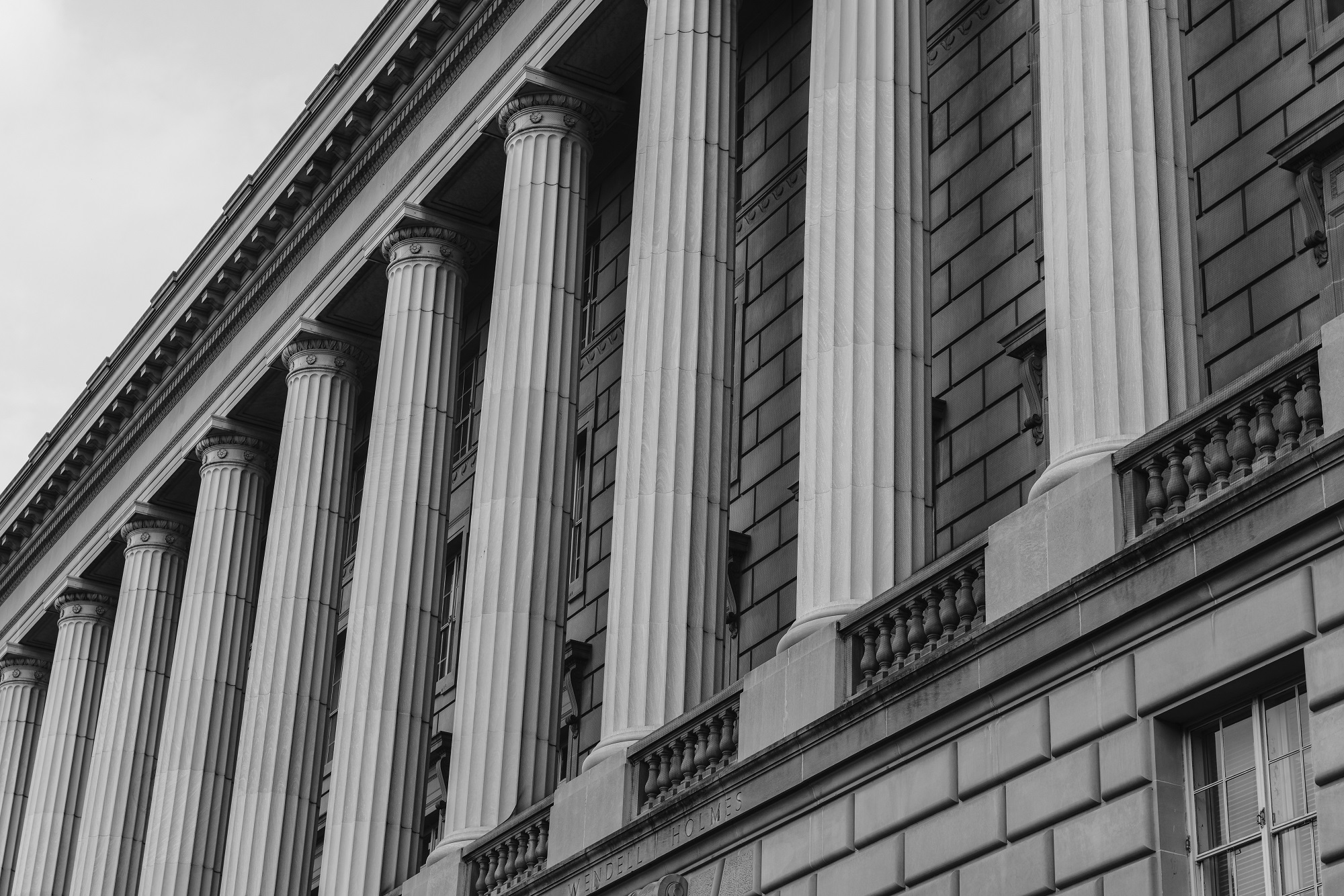
Pillars and Brick Wall

In In re CSB-System Int’l, Inc., No. 15-1832 (Fed. Cir. Aug. 9, 2016), the Court of Appeals for the Federal Circuit recently held that patents that expire during a pending re-examination before the Patent Trial and Appeal Board (“PTAB”) should be examined under the Phillips standard of claim  construction, and not the broadest reasonable interpretation (“BRI”) standard.  Typically, in District Court litigation claims in issued patents are construed using the framework set forth in Phillips v. AWH Corp., which considers the plain meaning of the claim terms themselves in light of the intrinsic record.  However, during re-examination proceedings for unexpired patents, the PTAB uses the BRI standard.  The reason for using the broader BRI standard in re-examinations is that a patent owner before the Patent and Trademark Office (“PTO”) with an unexpired patent may amend the claims to narrow their scope, thus negating any unfairness that may otherwise result from adopting the broader BRI standard.

To read this blog and the rest of our Intellectual Property blogs, click here: http://www.theiplawblog.com/2016/08/articles/patent-law/federal-circuit-holds-the-ptab-must-apply-narrower-phillips-claim-construction-standard-to-patents-that-expire-during-pendency-of-re-exam/